If you’ve poured time and money into marketing but still aren’t getting consistent leads for your business, you’re not alone.
Many small businesses feel stuck when it comes to generating predictable leads, even after launching a website, running ads, or posting on social media.
In fact, more than half of consumers say they wouldn’t trust a company without a website. So, if your online presence isn’t structured properly, your ability to attract leads for your business drops immediately.
However, the real issue is rarely “bad luck.”
Most of the time, there are structural gaps in strategy, targeting, conversion systems, or follow-up processes.
Before you give up, let’s break down the 5 core reasons why you’re not getting leads for your business, along with practical fixes and data-backed insights you can apply right away.
1. No Clear Strategy for Leads for Your Business
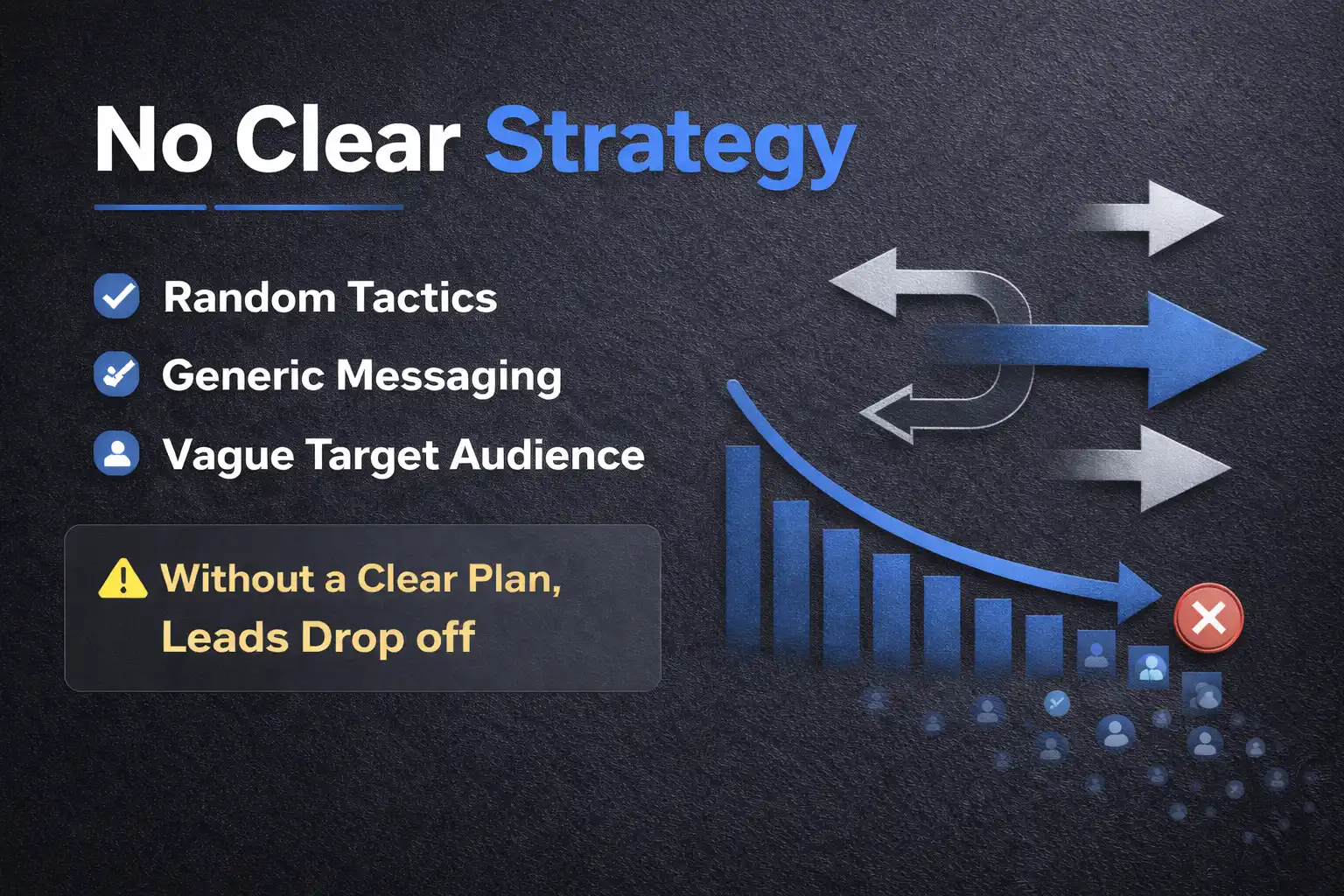
Many businesses try every tactic but lack a coherent strategy. They post on all platforms, run random ads, and create generic content – but without defining who their ideal customer is. This scattershot approach means you’ll attract the wrong audience. As one expert notes, failing to properly define your target market often leads to attracting people who have little interest in your products or services.
Why this kills your leads: Without a clear strategy, your marketing becomes reactive, not proactive. You’ll spend time and money with no way to know what’s working. For example, treating your small business like “everyone’s problem to solve” means no one feels addressed.
Quick fixes:
- Define your customer: Create detailed buyer personas (age, location, pain points).
- Focus your message: Craft one strong value proposition. Avoid “spray and pray” advertising – target specific interests or keywords.
- Coordinate channels: Pick 1–2 key platforms (e.g., Google Ads + local SEO, or Facebook + Instagram) and unify your messaging.
- Set clear goals: Decide what a “lead” means (form fill, call, demo request) and aim for consistent monthly numbers.
2. Website Issues: Not Built to Get Leads for Your Business
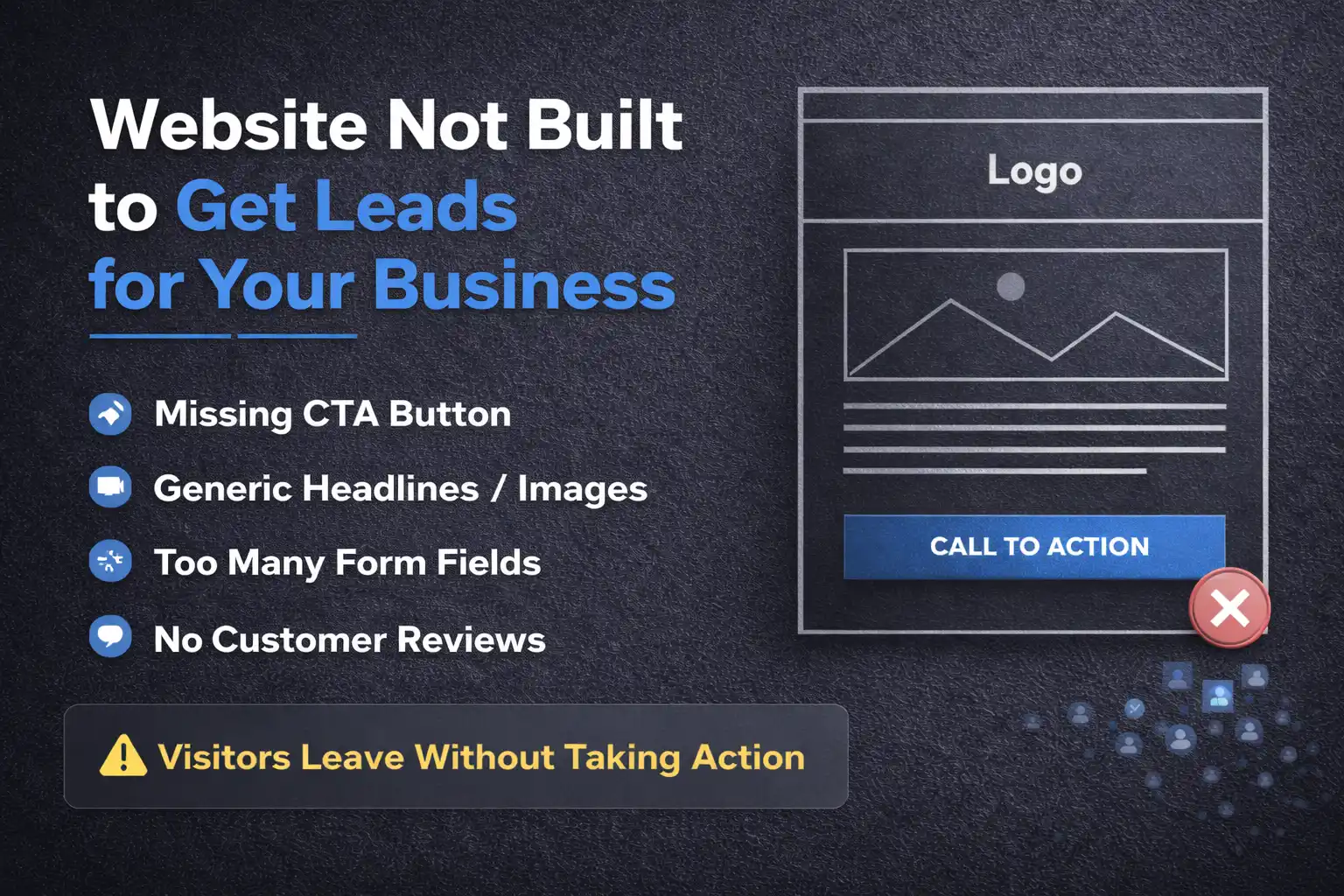
Your website might look good, but is it built to capture leads for your business? Many small biz sites act like digital brochures: they list services and contact info, but they don’t guide visitors to take action. A Stanford study found that 75% of users judge a company’s credibility by its website design. If your pages are cluttered, slow, or confusing, visitors will leave before submitting their info.
Common problems:
- No clear Call to Action (CTA) button on key pages.
- Generic headlines and stock photos (no trust or urgency).
- Too many form fields or steps to contact you.
- No social proof (reviews, testimonials, case studies).
Why this matters: Even if you drive 1,000 visitors, a site not optimized for conversion will get almost no leads. Industry data show the average website converts only about 2–3% of visitors. On a poor site, it may be much less.
Quick fixes:
- Simplify & spotlight: Make your main CTA obvious (e.g., “Get a Free Quote” button above the fold).
- Add trust signals: Display customer logos, reviews, and “As seen in” badges.
- Speed & mobile: Ensure your site loads quickly (studies show 40% of people abandon a site that takes over 3 seconds) and is mobile-friendly.
- Dedicated landing pages: For each campaign (ads or promotions), use a focused landing page with one goal. Well-optimized landing pages can convert 5–10% of visitors – far above a generic homepage.
3. Attracting the Wrong Traffic: Unqualified Leads for Your Business
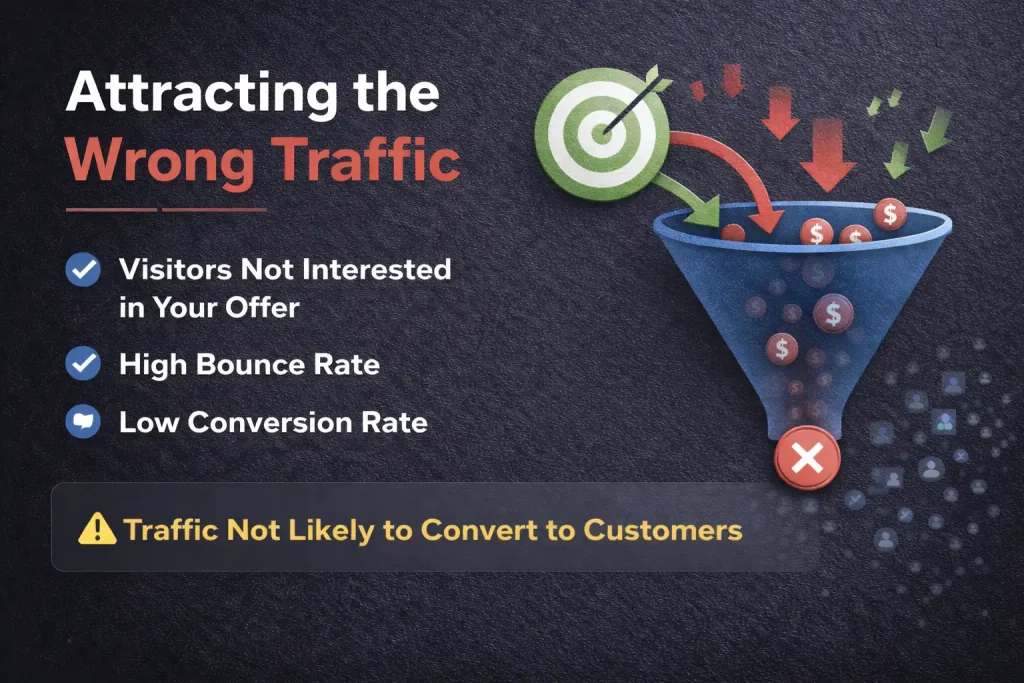
Traffic alone doesn’t produce leads – the right traffic does. Many businesses either ignore SEO or cast too wide an advertising net. For example, advertising to everyone aged 25–60 or relying on “boost post” tactics usually yields low-intent clicks. If you haven’t targeted your ads or content to specific keywords, you’ll see weak results.
Why this hurts: Google and Facebook audiences are very different. A person actively searching “best plumber in [city]” is high-intent, whereas someone randomly scrolling social media isn’t necessarily looking for your service. Ignoring this means you pay for clicks that never convert.
- On Google Ads, targeted search traffic typically converts at much higher rates than broad social traffic. (Someone clicking your ad for a search query often has the intent to buy.)
- In India, social media advertising can appear affordable at first. However, the cost per qualified lead varies significantly by industry. For competitive sectors like real estate, finance, and insurance, cost per click can range anywhere from ₹100 to ₹800+ or more—especially on high-intent search campaigns.
Quick fixes:
- Choose keywords wisely: Use specific, long-tail phrases (“near me,” location-based, and pain-related queries). For instance, run a “plumber near me” campaign only in your city.
- Match ads to audience: If using Google Ads, use search intent; if using Meta/Facebook, tightly target interests and demographics.
- Don’t focus only on cheap clicks. Focus on qualified leads. While traffic campaigns may produce low-cost clicks, real lead generation CPL in India often ranges between ₹100 and ₹800+, especially in competitive niches.
- Test and refine: Continuously split-test ad copy and landing pages. Even small tweaks can double your lead rate.
4. No Tracking, Testing, or Follow-Up (Flying Blind)
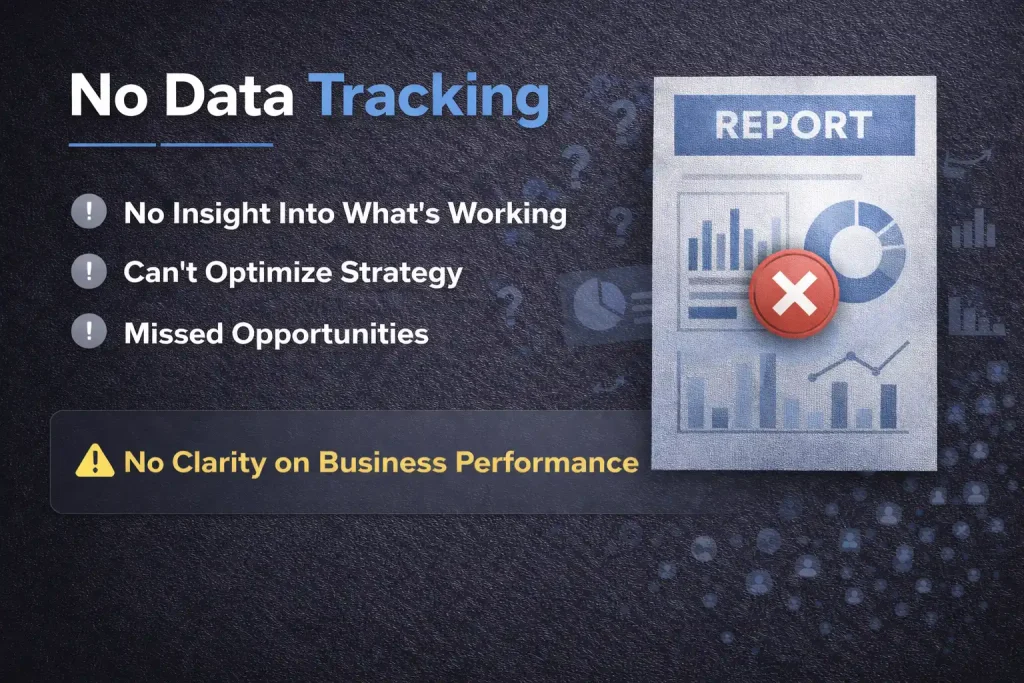
You cannot improve what you do not measure. Yet many small businesses run campaigns with no analytics or call tracking. Without capturing data on form fills, phone calls, and traffic sources, you have no idea which efforts generate real leads – and which waste money.
Why this matters: Guesswork leads to wasted spend. For example, if you don’t track conversions, you might pour money into an ad campaign that drives clicks but no calls. Companies that rely on data can cut ad spend on losers and double down on winners.
Key metrics:
- Form conversions and phone calls: Use Google Analytics goals and call-tracking software.
- Traffic sources: Know how many leads each channel (SEO, ads, referrals, social) produces.
- Cost per lead: Divide spend by leads to see true ROI. If a campaign has high traffic but also a high CPL, you may need to pause it.
Quick fixes:
- Install Google Analytics and set up conversion goals (quote form submissions, email sign-ups, etc.).
- Use UTM tags in your ad URLs to attribute leads to campaigns.
- Implement a simple CRM or spreadsheet to log inquiries. Even tracking “lead came from Facebook” vs “Organic search” is hugely helpful.
- Analyze results monthly. This reveals hidden problems (e.g., social media posts may get views but no real leads) and helps refine your strategy.
According to experts, businesses that prioritize tracking and analytics gain a competitive advantage. Without it, you’re essentially throwing money into a black box.
5. No Lead Nurturing: Wasting Leads for Your Business
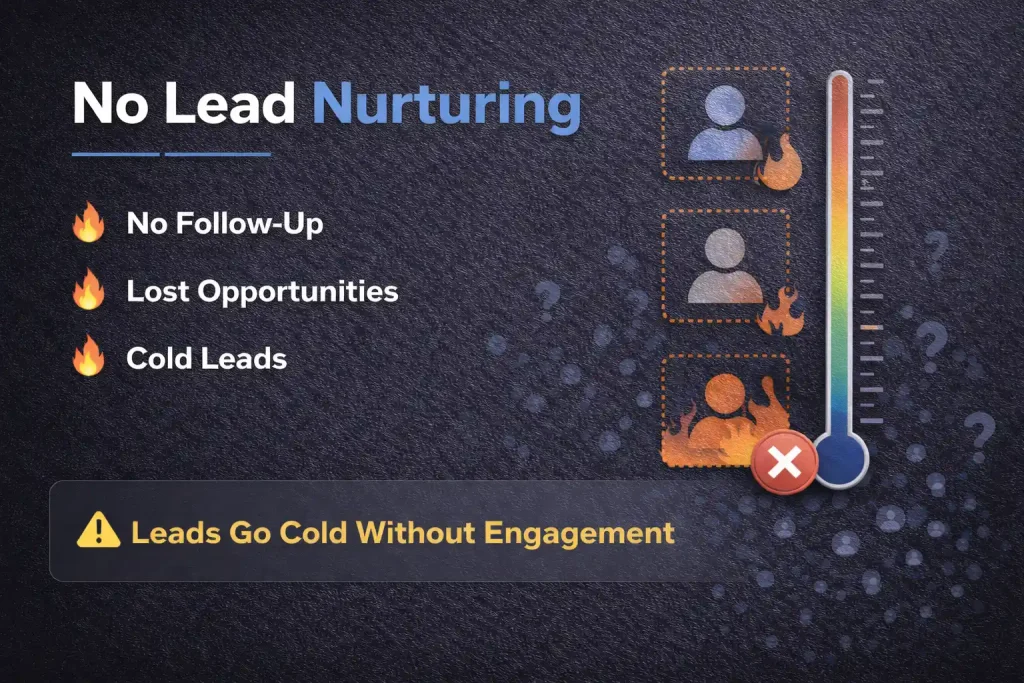
Finally, even if you do get inquiries, many businesses fail to follow up effectively. A one-time contact form is not a guarantee of conversion. Leads need to be nurtured into paying customers. Without a follow-up system, those contacts quickly go cold.
Why this matters: Studies show that lead nurturing campaigns generate 50% more sales-ready leads at a 33% lower cost. In other words, staying in touch with prospects and educating them will dramatically increase your conversions.
Common pitfalls:
- Ignoring unclosed inquiries. If a lead emails you or fills a form and gets no reply, that opportunity is lost.
- Lack of follow-up emails. Many businesses never add leads to an email list or reminder sequence.
- No retargeting. Visitors who left your site without converting rarely return unless retargeted.
Quick fixes:
- Timely follow-ups: Aim to respond to every inquiry within 1 business day. A quick thank-you email keeps prospects engaged.
- Email campaigns: Create a simple drip sequence (3–5 emails) that shares valuable content and reminds leads of your offer. This often brings people back to convert later.
- Retargeting ads: Use Facebook/Google pixels to retarget people who visited key pages. Remind them of your service with a special offer.
- CRM system: Even a simple CRM can automate reminders to call or email prospects.
Without these steps, even high-quality leads can slip through the cracks. Investing in a basic follow-up workflow often pays off many times over.
In Summary:
Struggling to get leads for your business usually comes down to fixable issues: lack of strategy, poor website conversion, wrong traffic, missing data, or no nurturing. Start by diagnosing each area: check if your site convinces visitors to act, whether you’re targeting the right audience, and if you have a system to capture and follow up with prospects.
If you address these five areas, you’ll turn more visitors into real leads for your business. And if you need help auditing your setup or crafting a plan, consider reaching out for a free consultation – don’t let simple fixes stand between you and the steady lead flow you deserve.